

Your Vote Has Power!
You can define your community’s future by voting in this year’s midterm elections.

Build My Ballot
Enter your address below to learn more about what’s on your ballot, and create your customized ballot today!
Upcoming Elections
Primary Election
Tuesday, August 4
In the Primary Election, you choose the candidates that will be on the ballot in November.
General Election
Tuesday, November 3
In the General Election, you decide which candidates will get the job!
Michigan has elections this August and November and you can use your power by voting in them. Learn more about what’s on your ballot, and create your customized ballot today.
There are a lot of important roles on your ballot that you have the power to help fill: from the Governor of Michigan, to your State Representative, to a Michigan Supreme Court Justice.
We believe that every vote has power and that by voting you can help define the future of your neighborhood, your city, the state of Michigan, and our country.
On August 4 and November 3, use your power and vote.
We’re here to guide you through your ballot and provide you resources and support so that you can confidently exercise your voting power.
Stay tuned for information about the midterm elections happening in Michigan in 2026.
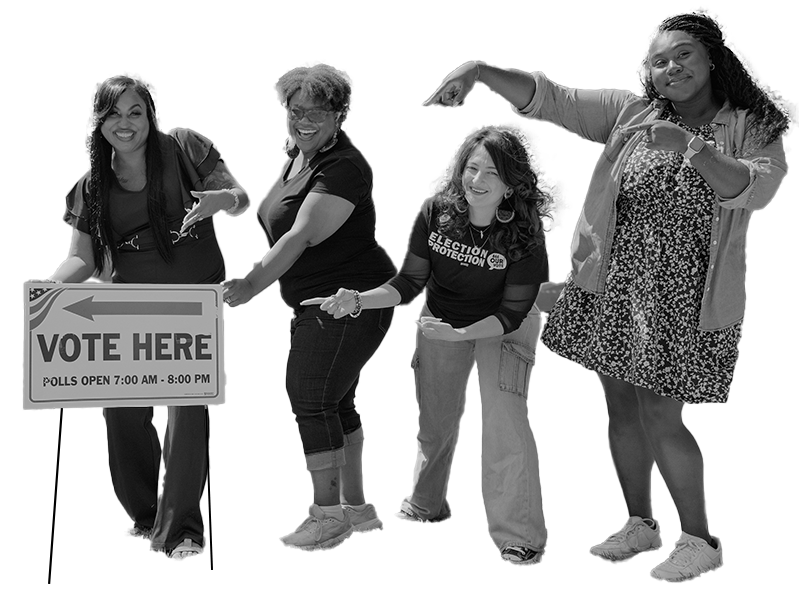
2026 Midterm Ballot
Ballots can be confusing! There are many jobs and issues on them that might not make a lot of sense, but that's ok. My Ballot My Power is here to help.
Taking the time to understand the jobs on your ballot, and how the people in those jobs make decisions about your life, means that YOU can make informed decisions about the future YOU want.
Learn about each job on your ballot by clicking on them.
Partisan Section
Straight Party Ticket
You can select one party from this section and it will select the candidate from that party in each race on your ballot (as long as there is a candidate).
Then skip to the nonpartisan portion of your ballot.
Options for filling out Your Ballot:
Vote a straight party ticket. You can select one party from this selection and it will select the candidate from that party in each race on your ballot (as long as there is a candidate). If you select a Straight Party Ticket you can then skip right to the nonpartisan portion of your ballot.
Vote a split ticket. You can select a party from the Straight Party Ticket section AND vote for individual candidates that are from a different party. Make sure to complete the nonpartisan portion of your ballot.
Vote a mixed ticket. Vote for individual candidates in each race. Make sure to complete the nonpartisan portion of your ballot.
Congressional
United States Senator
United States Senators write and vote on federal policies, and decide what programs get funded, and how much they are funded, at the federal level each year.
United States Senators will make decisions about:
- SNAP benefits.
- Health care and maternal health.
- Funding for public schools and teachers.
- Affordable childcare.
- Student debt.
Term: 6 years, no limit on how many terms.
Representative in Congress
United States Representatives write and vote on federal policies, and decide what programs get funded, and how much they are funded, at the federal level each year.
United States Representatives will make decisions about:
- SNAP benefits.
- Health care and maternal health.
- Funding for public schools and teachers.
- Affordable childcare.
- Student debt.
Term: 2 years, no limit on how many terms.
State Government
Governor of Michigan
The governor is the state’s chief executive, so they set policy and manage state agencies.
Key roles:
- Set a budget and determine how money is spent in Michigan.
- Approve or veto legislation.
- Shape the direction of our state.
Term: 4 years, no more than two terms.
Secretary of State
The Secretary of State oversees all state elections and voter registration, in addition to customer service responsibilities like driver’s licenses and vehicle registrations.
Key roles:
- Streamlines processes like getting your driver’s license.
- Runs Michigan’s elections.
Term: 4 years, no more than two terms.
Attorney General
The Attorney General acts as the state’s top lawyer and is responsible for both legal counsel and law enforcement.
Key roles:
- Holding corporations accountable.
- Enforcing environmental laws.
- Enforcing child support.
Term: 4 years, no more than two terms.
State Legislative
Representative in State Legislature
State Representatives write and vote on state policies, and decide what programs get funded, and how much they are funded, at the state level each year.
State Representatives make decisions about things like:
- Paid leave.
- Workforce development.
- Free school lunches.
- Child care stipends.
Term: 2 years, limited to 12 years total service, but that can be in the MI Senate (which has four-year terms), in the MI House, or a combination of the two.
Michigan State Senator
State Senators write and vote on state policies, and decide what programs get funded, and how much they are funded, at the state level each year.
State Senators make decisions about things like:
- Housing development.
- Utility oversight.
- Public school funding.
Term: 4 years, limited to 12 years of service (in MI Senate, MI house, or a combination of both).
State Boards
Member of the State Board of Education
Members of the State Board of Education manage K-12 public schools.
The State Board of Education makes decision about things like:
- School-based food programs.
- Student assessments.
- Early childhood learning.
- How federal funds are distributed to schools.
Note: Vote for two candidates in each race.
Term: 8 years.
Michigan State University Trustees
Members of the College Boards make decisions about the supervision of the universities and how their funds are spent. Members are not compensated for their service.
Note: Vote for two candidates in each race.
Term: 8 years.
University of Michigan Regents
Members of the College Boards make decisions about the supervision of the universities and how their funds are spent. Members are not compensated for their service.
Note: Vote for two candidates in each race.
Term: 8 years.
Wayne State University Board of Governors
Members of the College Boards make decisions about the supervision of the universities and how their funds are spent. Members are not compensated for their service.
Note: Vote for two candidates in each race.
Term: 8 years.
County
County Commissioner
County commissioners serve on the Board of County Commissioners and comprise the legislative branch at the county level.
They work to pass county level laws (called ordinances) and pass county level budgets.
Term: 4 years.
Drain/Water Resource/Public Works Commissioner
Drain Commissioner / Water Resource Commissioner (Oakland County) / Public Works Commissioner (Macomb County)
Drain commissioners are responsible for maintaining drainage systems and administering laws that relate to stormwater management, flood protection, and soil erosion.
Term: 4 years.
City
Mayor
The mayor is the highest elected office at the city level. They preside over the city council/city commission, and may be a voting member of the city council/commission.
A mayor’s duties may vary from city to city. Generally, they work to ensure that laws and ordinance are enforced, they develop and administer the city’s budget, appoint board and committee members, and manage city services. They are elected to a two- or four-year term depending on the city.
Term: 2 or 4 year term depending on the city.
City Councilmember/ City Commissioner
City councilmembers/commissioners are city-level lawmakers.
They develop and vote on city-level policies, approve budgets, appoint and direct officials (like the city manager).
Term: 2 or 4 year term depending on the city.
City Clerk
The city clerk is responsible for city-level clerical and administrative services, maintaining public records, facilitating meetings, and administering elections.
Term: 4 years.
Non-Partisan Section
Judicial
Justice of Supreme Court
Michigan Supreme Court Justices sit on the highest court in Michigan. They make decisions about:
- Paid leave.
- Minimum wage.
- Reproductive rights.
- The ability of police to stop and detain suspects.
Note: Candidates are appointed to the ballot by the two major parties (Republican and Democrat), but do not appear on the ballot with a party affiliation. There are two open seats on the ballot this year.
Term: 8 years, there is no limit on how many terms they serve, but a justice must be under 70 years old when they are elected.
Judge of Court of Appeals
Appellate court judges review cases from the trial courts and determine if an error occurred in a previous trial.
Judges on the appellate court serve a district that covers a geographic area.
Term: 6 years.
Judge of Circuit Court
Circuit court judges serve in a trial court and hear cases with damages over $25,000 as well as all felony criminal cases.
Term: 6 years.
Judge of Probate Court
Probate court judges handle wills, estates, and trusts.
They appoint guardians and conservators for minors, and order treatments for people with mental illnesses as well as for people with developmental disabilities.
Term: 6 years.
Judge of District Court
District court judges serve in a trial court and hear cases with damages under $25,000. These judges decide on traffic violations, tenant and landlord disputes, and all misdemeanor criminal cases.
Term: 6 years.
Local
Local School District Board Member
Local school board members are responsible for the operations of the school district.
They make decisions about curriculum, staffing, student safety and welfare, property, and establish policies.
Term: 4 years.
Community College Board of Trustees
Members of the College Boards make decisions about the supervision of the community colleges and how their funds are spent. Members are not compensated for their service.
Term: 6 years
Proposal Section
Proposal 1: Constitutional Convention (Con-Con)
A Constitutional Convention (Con-Con) is on the ballot every 16 years and has always been rejected. If passed, there will be a statewide constitutional convention. One delegate from every MI legislative and Senate district would be elected in special primary and general elections. Campaign finance limitations would not apply to the election of delegates so there would be no limit on campaign donations. The convention is open-ended. Guidelines are decided by the delegates. Delegates could decide to not change anything, or to rewrite the entire Constitution.
A new constitution must be approved by 2/3 of delegates and then presented to voters at a special election within 90 days. Acceptance/rejection of the proposed constitution would be decided by a simple majority of voters.
Proposal 2: Michiganders for Money out of Politics (MMOP)
Michiganders for Money out of Politics (MMOP) is a citizen-led, nonpartisan campaign finance reform ballot initiative. The proposal would ban regulated utilities from contributing to state officeholders and political party committees, ban corporations with state or local government contracts (of more than $250,000 annually) from contributing to candidates for state or local offices in the jurisdiction of the contract, and modernize Michigan’s campaign finance disclosure requirements.
Which branch of government do these roles fall under?
Executive Branch
Federal:
President
State:
Governor
County:
County Executive
City/Township:
Mayor / Township Supervisor
Legislative Branch
Federal:
U.S. House of Representatives (aka Congress) and U.S. Senate
State:
State House of Representative and State Senate
County:
Board of County Commissioners
City/Township:
City Council or City Commission / Board of Trustees
Judicial Branch
Federal:
U.S. Supreme Court
State:
Michigan Supreme Court, Court of Appeals
County:
Prosecutor and Circuit Court Judges
City/Township:
District Court Judges and Magistrates
Are You Registered to Vote?
Make sure you register to vote, or that you’re registered to vote at the correct address.
Resources
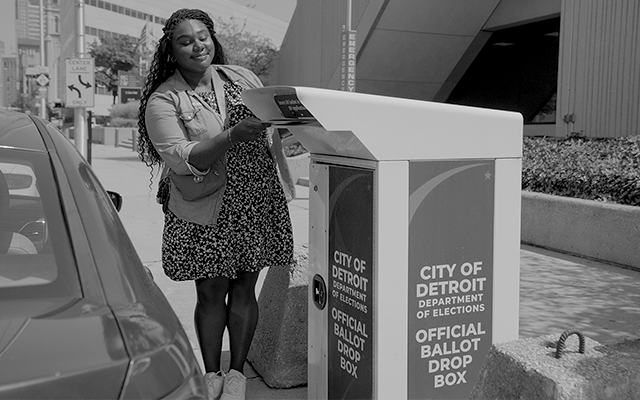
MichiganVoting.org
Learn everything you need to know about voting on or before Election Day at MichiganVoting.org

Citizen's Guide
So you really want to dig in on this stuff? Here’s a Citizen’s Guide to Michigan Government.
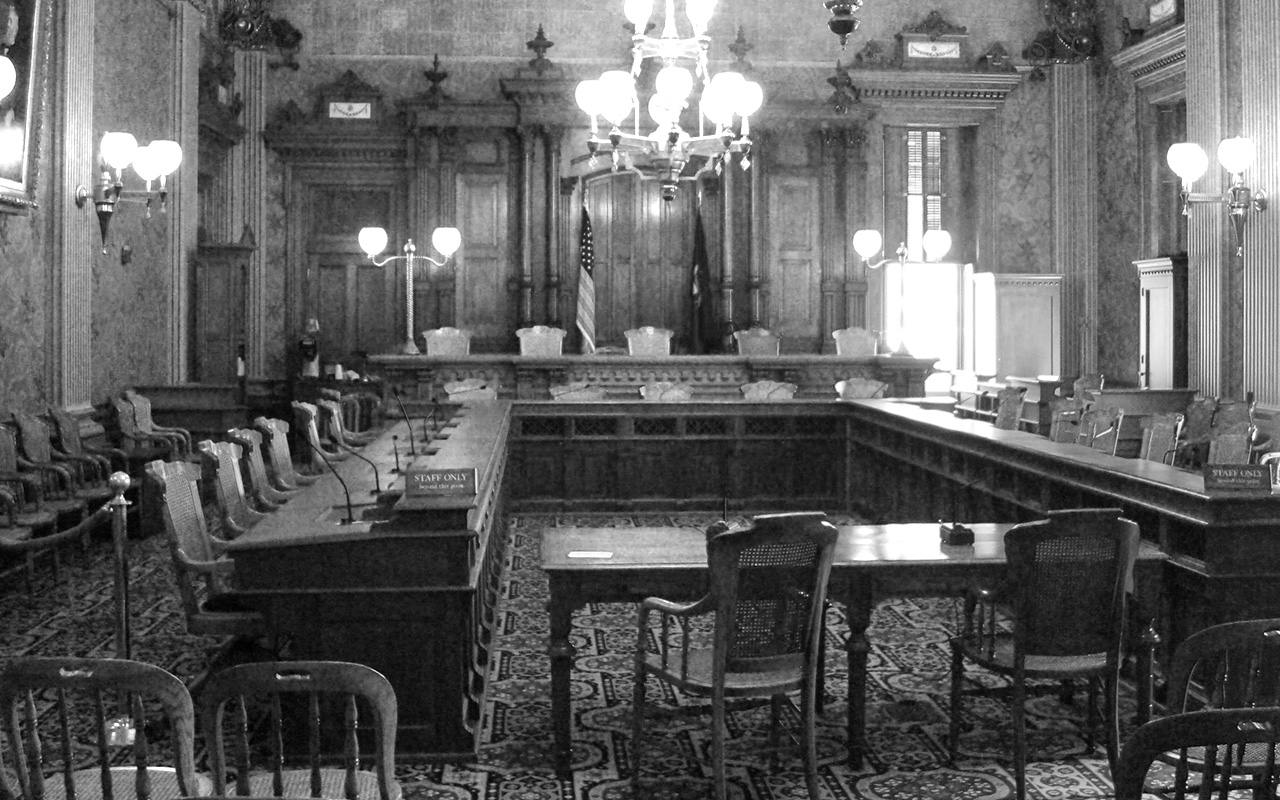
Michigan's Courts
Learn more about Michigan’s Courts at Courts.Michigan.gov

Vote411.org
Learn all about the candidates on YOUR ballot by visiting Vote411.org and entering your address.